When we watch our toddlers pick up a single crayon, carefully string a wooden bead, or slide the colorful pieces of an abacus back and forth, we are witnessing something incredible. We are watching the crucial development of fine motor skills. These small, precise, and calculated movements of the hands and fingers are the absolute building blocks for your child’s future academic and daily independence.
For parents navigating the crucial years of toddlerhood and seeking high-quality early childhood education in Haldwani, understanding how a school integrates physical and cognitive development into its daily routine is essential. When you are choosing the right preschool in Pilikothi Haldwani, you want an environment that doesn’t just watch children play, but intentionally guides their play to build a Strong Foundation for life.
In this comprehensive guide, we will explore what fine motor skills are, why they are so important to your child’s brain development, the milestones you should look out for, and how AaKaar Pre School intentionally nurtures these abilities every single day.
What Are Fine Motor Skills?
To understand fine motor skills, it helps to look at the body’s overall physical development. Motor skills are generally divided into two categories: gross motor skills and fine motor skills.
Gross motor skills involve the large muscles of the body—the ones used for running, jumping, climbing, and maintaining balance. Fine motor skills, on the other hand, involve the sync of the small muscles in the hands, fingers, and wrists, usually in coordination with the eyes.
Every time a child turns the page of a book, pinches a piece of playdough, or holds a spoon to eat, they are relying on their fine motor skills. In the context of a playgroup school in Haldwani, these skills are the silent engine driving a child’s ability to participate in art, writing, and self-care.
Why Fine Motor Development is Crucial in Early Childhood
The development of finger and hand dexterity is not just about physical strength; it is deeply connected to a child’s cognitive growth and emotional confidence. Here is why prioritizing this development is a core focus at our early learning school in Haldwani:
1. The Pathway to Writing Readiness
Long before a child can write the alphabet or their own name in a kindergarten school in Haldwani, they must develop the physical hand strength to hold a pencil correctly. This specific grip is known as the “pincer grasp” (using the thumb and index finger). Without developed fine motor skills, holding a pencil feels exhausting for a child, which can lead to frustration and a dislike for writing tasks later on.
2. Fostering Daily Independence
Toddlers crave independence. Hearing “I can do it myself!” is a daily occurrence for parents. Fine motor skills empower children to achieve this independence. Zipping up a winter jacket, buttoning a school uniform, opening a plastic lunchbox, or tying shoelaces all require incredibly refined finger dexterity. Teaching these skills helps children feel confident.
3. Enhancing Hand-Eye Coordination
Hand-eye coordination is the ability of the vision system to coordinate the information received through the eyes to control, guide, and direct the hands. When a child at our affordable play school in pilikothi Haldwani builds a tower of blocks or works on a puzzle, they are continuously training their brain to sync their visual input with their physical output.
4. Neurological and Cognitive Growth
Did you know that the hands have one of the highest concentrations of nerve endings in the human body? Activities that require precise hand movements—like sorting small objects by color or moving beads on an abacus—directly stimulate problem-solving areas in the brain. The physical act of tactile play builds neural pathways that support logic, spatial awareness, and concentration.
Key Fine Motor Milestones to Watch For
While every child develops at their own beautiful, unique pace, there are general milestones that pediatricians and educators observe. If you are preparing to enroll your child in a nursery school in Mukhani Haldwani, here is a general timeline of what fine motor progression looks like:
- 12 to 18 Months: Toddlers begin to build small towers using two to three blocks. They can scribble with a whole-hand grasp (holding a crayon like a dagger), turn the pages of a thick board book, and successfully bring a spoon to their mouth (even if it is a bit messy!).
- 2 to 3 Years (Playgroup Age): At this stage, children start to show hand dominance (favoring the left or right hand). They can turn single pages of a standard book, snip paper with child-safe scissors, string large beads, and hold a crayon with their thumb and fingers rather than their whole fist.
- 3 to 4 Years (Nursery Age): Children in our preschool in Pilikothi Haldwani can usually draw circles, build towers of up to 10 blocks, use playdough to roll shapes, and begin to copy simple capital letters. They can also manipulate clothing fasteners like large buttons and zippers.
- 4 to 5 Years (Kindergarten Age): Fine motor skills become much more refined. Children can hold a pencil with a mature tripod grasp, write their own names, cut along straight lines with scissors, and draw recognizable shapes and people.
How We Build Fine Motor Skills at AaKaar Pre School
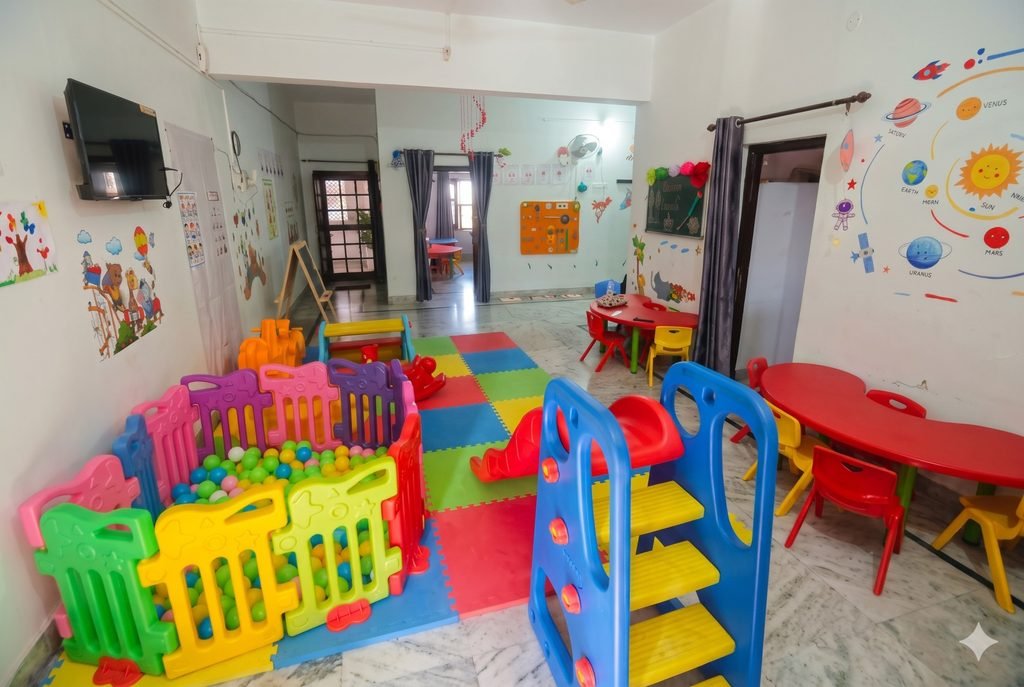
At AaKaar Pre School, widely recognized as the best play school in Haldwani, we do not believe in handing toddlers worksheets and expecting them to sit still. True early education is active, engaging, and hands-on. Every activity at our campus is designed with a specific developmental purpose in mind.
Here is a look at how we seamlessly integrate fine motor development into our daily curriculum:
1. The Abacus and Tactile Toys
If you walk into our classrooms, you will see children gathered around colorful abacuses. Sliding the wooden beads along the metal tracks requires isolation of the index finger and thumb, building the exact muscles needed for the pincer grasp. It also introduces them to early counting and color recognition.
2. Art and Creative Expression
Coloring, painting, and drawing are daily staples. We provide thick crayons tailored for small hands, allowing children to practice their grip while expressing their creativity. Peeling stickers and placing them on paper is another highly effective—and incredibly fun—way we build finger strength.
3. Playdough and Clay Modeling
Squishing, rolling, pinching, and flattening clay provides deep proprioceptive feedback to a child’s hands. It acts as resistance training for the tiny muscles in their fingers and palms.
4. Lacing and Threading Activities
Threading shoelaces through perforated wooden cards or stringing beads onto a thick yarn requires intense bilateral coordination (using both hands together to complete a task). One hand must hold the card steady while the other hand precisely weaves the lace.
5. Sensory Bins
We utilize sensory bins filled with sand, water, or smooth grains. By giving children tongs, small scoops, and cups, they practice measuring, pouring, and transferring materials, all of which require delicate wrist rotations and hand strength.
Simple Activities Parents Can Do at Home
The journey of early childhood education in Haldwani is a partnership between the school and the parents. You can easily reinforce these skills at home using everyday household items!
- Tearing Paper: Let your child tear old newspapers into small strips. This simple act builds tremendous strength in the fingers.
- Sponge Squeezing: During bath time, give your child a sponge. Let them fill it with water and squeeze it out using both hands.
- Sorting Coins or Beans: Have your child sort different colored dried beans or large coins into separate bowls. Ensure you supervise closely to prevent any choking hazards.
- Pasta Necklaces: Threading penne pasta onto a shoelace is a fantastic, low-cost way to replicate the bead-stringing activities we do at school.
Why AaKaar is the Right Choice for Your Child’s Development
Choosing the right start for your child is a massive decision. At AaKaar Pre School, we take pride in offering the finest, most comprehensive early childhood education in Haldwani. We recognize that early learning is not just about reciting the alphabet; it is about building the physical, emotional, and cognitive architecture that will support your child for decades to come.
Furthermore, we know that modern, working families need robust support. That is why our campus also functions as a premium, safe daycare for kids. After regular school hours are over, children enrolled in our daycare program do not just sit idly. They continue to engage in these guided, skill-building activities, supervised by trained educators in a secure, hygienic, and loving environment. We ensure that premium education remains accessible by being a highly affordable play school in pilikothi Haldwani.
Conclusion
Building fine motor skills is a gradual, incredibly rewarding process that requires patience, the right developmental tools, and a nurturing environment that celebrates every small victory. Whether your child is just learning to hold a crayon or is getting ready to write their first sentences, they need a space that encourages exploration without pressure.
If you are searching for a nursery school in Mukhani Haldwani or Pilikothi that prioritizes holistic, whole-child development, we would love to welcome you into our family. With admission open play school in Haldwani, now is the perfect time to secure your child’s enrollment for the upcoming session.
Help your child build a Strong Foundation today. Call us at 7906239231 or visit our campus opposite Chandrawati Colony on Pilikothi Road to see our interactive, skill-building classrooms firsthand!