Author name: Aakaar School

Education

Holistic Development

Holistic development focuses on nurturing every aspect of a child’s overall growth—intellectual, physical, emotional, and social—rather than focusing strictly on academic memorization. Early childhood is a critical stage where a child’s brain and body develop simultaneously. A holistic curriculum integrates creative arts, physical activities, emotional regulation, and social interactions alongside foundational academics like reading and math. By addressing the whole child, this approach ensures that children grow into balanced, resilient, and well-rounded individuals equipped with both cognitive abilities and essential life skills. Q1: What are the main pillars of holistic development in early education? A: The primary pillars include cognitive development (thinking and problem-solving), physical growth (fine and gross motor skills), social-emotional learning (empathy, sharing, and confidence), and creative expression (art, music, and imagination). Q2: How does holistic learning prepare children for future academic success? A: By fostering curiosity, emotional resilience, self-regulation, and teamwork alongside traditional learning, children become adaptable and confident learners who can easily handle higher-grade challenges. Q3: How is holistic development implemented in daily classroom activities? A: It is implemented through a blend of structured play, outdoor physical activities, storytelling, artistic projects, sensory exercises, and collaborative group tasks rather than continuous desk-based instruction. Conclusion At AaKaar Preschool , holistic development is not just an educational strategy—it is our core commitment to your child’s growth. By giving equal importance to mind, body, heart, and spirit, we ensure that every child graduates from our early learning programs with a confident identity, a resilient mindset, and a genuine passion for discovery. We do not simply prepare children for the next academic grade; we equip them with the life skills, emotional balance, and intellectual curiosity needed to thrive in an ever-changing world.
Education

Values First

At AaKaar Preschool , academic readiness and personal character go hand in hand. Our “Values First” approach ensures that foundational human values—such as empathy, honesty, respect, kindness, and responsibility—are seamlessly integrated into everyday learning. Rather than teaching values through passive lessons, we create real-life experiences where children practice sharing, helping peers, and understanding different perspectives. By instilling strong moral roots early on, we help shape compassionate, self-aware, and socially responsible individuals who make positive contributions to the world around them. Q1: How are moral values taught to young children without formal lectures? A: Values are caught, not just taught. We embed character-building into daily routines through cooperative games, role-playing, storytelling with moral themes, and active teacher modeling of kindness and respect. Q2: Why is a “Values First” focus critical during early childhood? A: The preschool years are a formative period for brain development and emotional shaping. Introducing core values early helps children build a strong inner compass, healthy social bonds, and high emotional intelligence (EQ) alongside their intellectual growth. Q3: How do parents stay involved in this value-based education? A: We partner closely with families to maintain consistency between home and school. Through regular updates and home-activity suggestions, parents can reinforce the positive habits and empathy lessons practiced in the classroom. Conclusion At AaKaar Preschool & Daycare, early education is more than just learning numbers and alphabets—it is about nurturing the heart and mind together. Through our Child-Centric Approach, Holistic Development, and Values First philosophy, we offer a complete, balanced ecosystem for your child’s initial steps into the world. We invite you to step into our Haldwani campus, meet our dedicated team, and witness how we transform early learning into a joyful, value-rich lifetime adventure.

Education

Child-Centric Approach

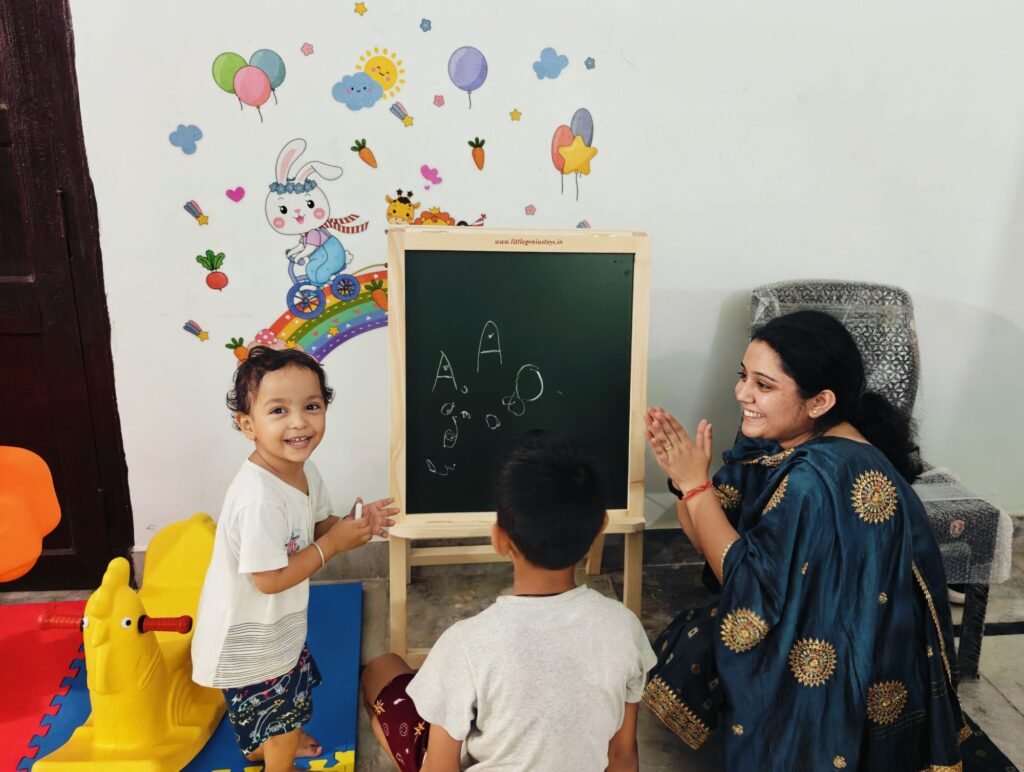
A child-centric approach in early childhood education places the unique needs, interests, learning styles, and natural curiosity of each child at the center of the learning environment. Instead of forcing children into a rigid, one-size-fits-all curriculum, this methodology tailors activities to fit the child’s developmental pace. Teachers act as facilitators and guides rather than traditional lecturers. Children are encouraged to choose activities, explore concepts through hands-on experiences, ask questions, and solve problems independently. This approach fosters genuine enthusiasm for learning, builds self-confidence, and supports holistic growth—spanning cognitive, emotional, social, and physical development. How does a child-centric approach differ from traditional teaching? Traditional teaching is teacher-led and focuses on uniform instruction, rote learning, and strict schedules. In contrast, a child-centric approach is student-led, focusing on hands-on discovery, personalized learning speeds, and active student participation. What role does the teacher play in a child-centric classroom? Rather than standing at the front of the class delivering lectures, the teacher observes each child’s individual interests and abilities, prepares a stimulating environment, and guides children as they explore and learn at their own pace. How does a child-centric approach benefit young learners? It helps children build independence, critical thinking skills, and strong self-confidence. By giving them choices and respecting their natural curiosity, children develop a genuine, lifelong love for learning.

Montessori-Curriculum-for-Young-Mind
Education

Montessori Curriculum for Young Minds

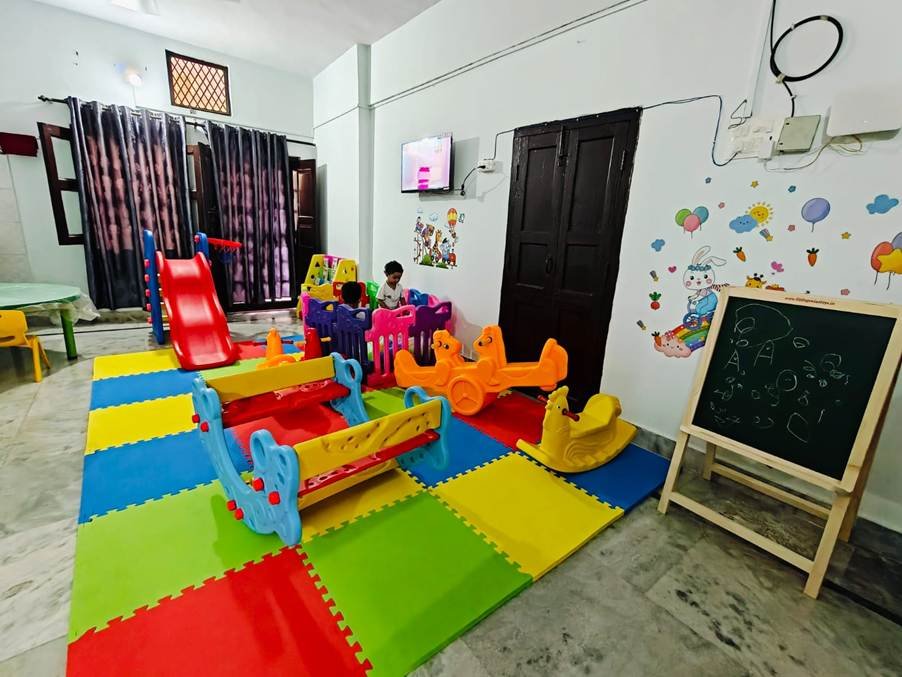
The first six years of a child’s life are a period of staggering cognitive and emotional growth. During this sensitive phase, children possess an “absorbent mind,” soaking up knowledge from their surroundings at an exponential rate. For parents exploring early education options, finding an environment that harnesses this natural curiosity is essential. If you are searching for the best play school in Haldwani, understanding the philosophy behind how your child will learn is just as important as the facilities themselves. At AaKaar Play School, we believe that education should be a beautiful phase of discovery. That is why our foundation is deeply inspired by the Montessori approach—a globally recognized method that replaces academic pressure with joyful, self-directed exploration. What is the Montessori Approach? Developed by Dr. Maria Montessori, this educational philosophy shifts the focus from traditional, teacher-led instruction to child-led discovery. In a Montessori setting, the classroom is a carefully “prepared environment” designed to meet the unique needs of young learners. Instead of sitting at desks and listening to lectures, children are encouraged to move, choose their own meaningful activities, and learn through hands-on experiences. How Young Minds Benefit from Montessori Learning Bringing Quality Early Education to Haldwani children. For families searching for a top-tier play school in Pilikothi, AaKaar Play School provides a secure, modern, and nurturing learning campus right in the neighborhood. Due to our central location on Pilikothi Road with seamless road connectivity, we are also a prime choice for parents seeking a trusted pre school Mukhani or an accessible mukhani play school nearby. As a dedicated pre primary school Haldwani, AaKaar offers tailored programs for Playgroup (2+ years), Nursery (3+ years), and Kindergarten (4+ years), ensuring every child builds a strong, confident foundation for lifelong learning. Conclusion Early childhood education is not a race—it is the bedrock upon which a child’s love for learning is built. By integrating Montessori-inspired methods with warm, values-driven care, AaKaar Play School ensures that your child learns with love rather than pressure. Giving your child the right start sets the stage for academic resilience, emotional maturity, and creative confidence. References:

Scroll to Top